IRDAI Public Insurance Registry 2026 What It Means for Indian Policyholders

Many Indian families own more insurance than they can easily track. A term plan bought years ago, a health policy renewed through an app, motor insurance linked to a vehicle, a personal accident cover from an employer, and maybe a small policy taken by a parent. The problem is not always lack of insurance. Often, it is lack of a single, reliable record.
That is why the proposed Public Insurance Registry, or PIR, matters. If implemented well, it could become a central digital record that helps policyholders view and manage their insurance policies in one place. The idea is still a proposed initiative, so the final rules, access process, data fields and timelines may evolve.

What the proposed Public Insurance Registry could be
The Public Insurance Registry India proposal aims to create a centralised digital record of insurance policies. In simple terms, it could work like a consolidated reference point for key insurance details across insurers and policy types.
A useful PIR could include information such as:
Policy numbers and insurer names
Life, health, motor and other policy categories
Premium amounts and payment frequency
Renewal dates and grace periods
Nominee details
Claim status or past claim references
Contact and identity-linked information, subject to rules
The goal is not just convenience. Better insurance records can reduce confusion at the exact moment when clarity matters most, such as during hospitalisation, a vehicle claim, or after the death of a policyholder.
This is part of a wider direction in digital insurance India, where regulators and insurers are using technology to make insurance easier to access, verify and manage. The term IRDAI Public Insurance Registry 2026 is being used widely to describe this proposed reform, but policyholders should wait for official implementation details before assuming how the system will work.
How it could help policyholders in daily life
A central registry could solve several common insurance problems.
Forgotten policies may become easier to find.
Many people buy small savings-linked insurance plans, group covers, add-on accident policies or old life policies and then lose track. A digital record could help identify such policies before they mature, lapse or remain unclaimed.
Renewals may become easier to manage.
Health and motor policies usually need timely renewal. Missing a renewal can create gaps in protection, especially in health insurance where waiting periods and continuity benefits matter. If a registry highlights renewal dates, it could support better insurance policy management.
Families may find policies faster.
Nominees and family members often do not know where policy documents are stored. In difficult situations, this creates delays. A reliable registry could help families locate life insurance policies, nominee records and claim pathways more easily.
Coverage gaps may become clearer.
A person may think they are adequately insured because they have several policies. But the actual cover may be too low, duplicated in the wrong places, or limited by exclusions. A consolidated view can help identify whether there is enough life cover, health cover, personal accident protection and vehicle insurance.

Will all insurance policies appear in one place
That is the big question. The answer will depend on the final design, data-sharing rules and the participation framework announced by IRDAI and relevant entities.
In principle, a strong registry could include life, general and health insurance policies. That may cover term insurance, endowment plans, ULIPs, family floater health policies, individual health plans, motor insurance, travel cover, personal accident policies, home insurance and more.
But policyholders should keep three points in mind:
The registry is proposed, not fully defined for public use yet.
Final features may differ from early expectations.
Data accuracy will matter.
If names, mobile numbers, PAN, Aadhaar-linked details, addresses or nominee information differ across insurers, records may need correction.
Privacy and access controls will be important.
Insurance data is sensitive. The system will need clear rules on who can view information, how consent works, and how nominees or legal heirs can access records.
For this reason, the proposed PIR should be seen as a major support tool, not a replacement for personal record-keeping.
Why nominees and claims deserve special attention
The insurance nominee is one of the most overlooked parts of policy management. A nominee is the person named to receive policy benefits, subject to the terms of the policy and applicable law. If nominee details are outdated, missing or unknown to the family, claims can become harder to process.
Common issues include:
A nominee listed before marriage or family changes
Misspelled names
Old addresses or phone numbers
No nominee added for certain policies
Family members unaware that they are nominees
A Public Insurance Registry could make nominee information easier to review. It may also help families identify which insurer to contact for a claim. This could be especially useful for life insurance and personal accident policies, where the claimant may not have access to the policyholder’s email, phone or physical files.

What Indians should do now to organise insurance records
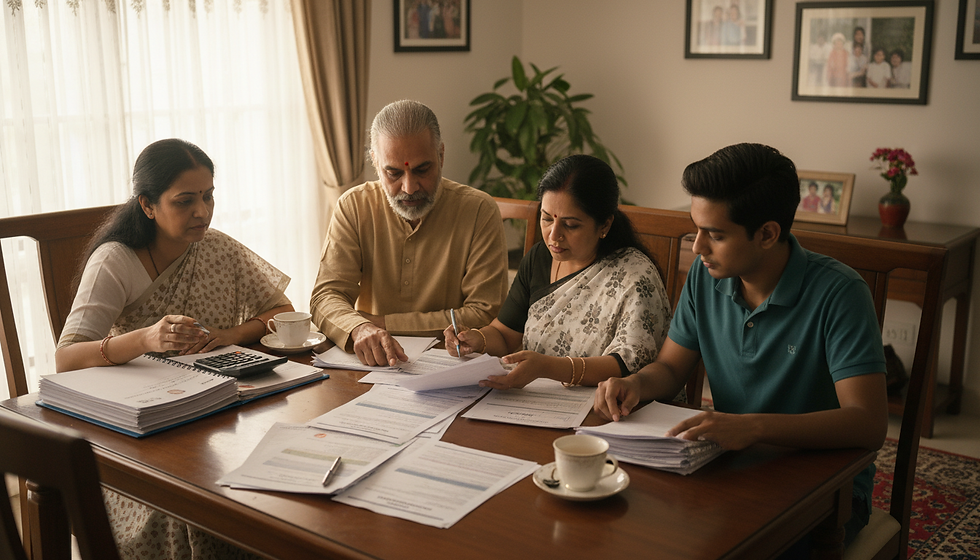
A future registry can help, but good preparation starts now. Every household should maintain its own insurance file, both digital and physical.
Use this simple checklist.
Create one master insurance list.
Include insurer name, policy number, policy type, sum insured or sum assured, premium, renewal date and nominee name.
Store documents in two formats.
Keep physical copies in one labelled folder. Save digital copies in a secure cloud folder or encrypted drive.
Update nominee details.
Check every life, health, motor and personal accident policy. Correct outdated names, spelling errors and contact details.
Share basic information with trusted family members.
At least one responsible family member should know where the insurance file is kept and which policies exist.
Track renewal dates.
Add reminders on a phone calendar 30 days and 7 days before each insurance renewal.
Review coverage once a year.
Life changes such as marriage, children, loans, business growth, relocation or ageing parents can change insurance needs.
Match records with insurer portals.
Log in to insurer websites or apps and check whether mobile numbers, email IDs, addresses and nominee details are current.
This approach is useful whether someone lives in a metro or a small town. It also helps people searching for guidance around IRDAI insurance registry India 2026, insurance policy management Mumbai, or an insurance advisor India, because the basics remain the same across the country.

What this could mean for the future of insurance in India
The proposed Public Insurance Registry could make insurance more transparent, easier to manage and more useful at claim time. It could reduce forgotten policies, prevent avoidable lapses, improve nominee awareness and help households understand their real protection.
Still, policyholders should treat it as an upcoming reform whose details may change. Until the system is formally rolled out, the safest move is to organise records, update nominees and review coverage regularly.
Want help organising and understanding your insurance portfolio? TrustCare Insurance provides personalised insurance guidance to individuals, families and businesses across India. Visit TrustCare Insurance.
This article is for general information only and should not be treated as financial, legal or insurance advice. For decisions about specific policies, speak with a qualified insurance advisor or the insurer directly.

Comments